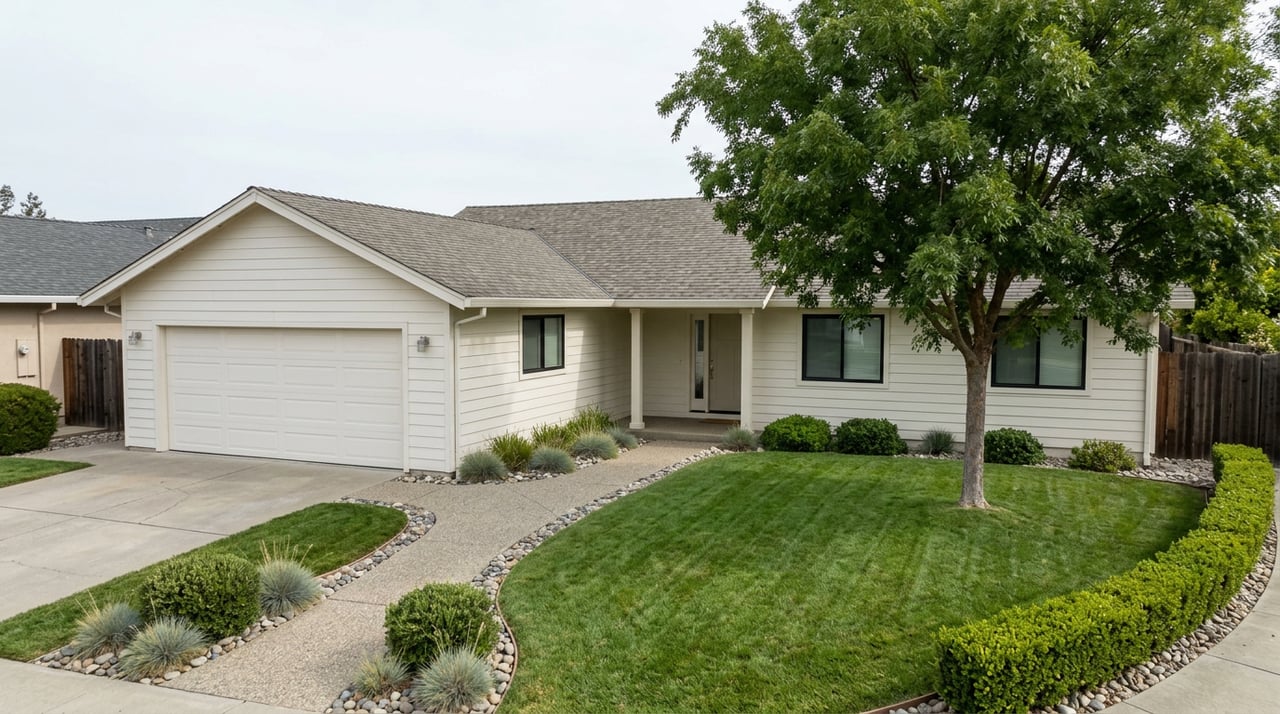
One item flagged on Windsor home inspection reports is polybutylene plumbing, a material many current buyers may not recognize that can sit behind the walls of houses that don't look old.
That's the part that catches people off guard. Windsor doesn't read as an old town. It was incorporated in 1992, the Town Green didn't open until 2001, and most of the subdivisions locals grew up in still feel current: wide streets, mature but not ancient trees, houses with the open floor plans buyers expect. Nothing about driving through Windsor says "vintage risk." But age isn't really about how a house looks. It's about when it was built, and Windsor was built almost all at once.
The Instinct That's Working Against You
The natural assumption is that a younger town means younger systems, and younger systems mean fewer surprises at inspection. That logic holds up fine in places where housing stock spans a century, because problems get spread out too. One street has knob-and-tube wiring from the 1930s, another has PEX plumbing from last year, and the risk is diluted across decades.
Windsor doesn't work that way. Because the town's growth happened in one concentrated burst, a huge share of its single-family inventory was built using the same materials, the same code requirements, and the same builder habits, all within about fifteen years of each other. That means a huge share of Windsor's housing stock is also aging out of its major systems at close to the same time. A concentrated build period can bring major-system milestones closer together. That timing helps explain why inspection reports from different parts of Windsor may flag some of the same issues.
Windsor's Build-Out, By the Decade
According to town history and local real estate coverage, Windsor's population sat under 5,000 as late as 1990. Once the town incorporated in 1992, growth accelerated fast, and its subdivisions were developed mainly between 1990 and the mid-2000s. That's not a vague generalization. It shows up by name across the map:
- Shiloh and Vintage Greens, built near the Windsor Golf Course
- The Tree Streets, an established pocket built in the 1990s
- Lakewood Hills and the Villas by Schellinger Homes, both traditional and Mediterranean-style subdivisions from the same build-out
- Foothill Park and Foothill Oak Estates, developed along the eastern edge near Foothill Regional Park
- Esposti Park and Oak Creek, neighborhoods that filled in as the town expanded outward
Different price points, different architectural styles, different sides of town. Same fifteen-year window.
What That Window Actually Overlaps
Here's where the timing gets uncomfortable. Polybutylene plumbing, the gray or blue-gray plastic tubing that was cheap and easy to install, was used in homes across the country from 1978 until manufacturers stopped production in 1996 after mounting evidence that the pipes cracked and failed under normal water pressure. That failure pattern led to a class-action settlement (Cox v. Shell Oil Company) that eventually paid out more than a billion dollars nationally, according to InterNACHI's inspector guidance.
Windsor's earliest wave of subdivision construction, roughly 1990 through 1995, sits squarely inside that installation window. It's not a coincidence that renovation contractors working in Windsor homes from this era have reported finding polybutylene supply manifolds still in service during remodels, sometimes discovered only after walls come open. A home inspector won't always catch it either. Polybutylene deteriorates from the inside, and InterNACHI is explicit that inspectors aren't required to test for it and often can't confirm it without shutting off water and opening up the line.
The plumbing isn't the only system reaching a milestone at the same time. Roofing underlayment on a comp-shingle roof typically lasts 20 to 25 years depending on installation and sun exposure. A roof installed when a Windsor subdivision was built in the mid-1990s to early 2000s may be nearing or past that window. Electrical panels from that era were sized for the electronics of their time, not for the number of devices, chargers, and HVAC loads a household runs today. And tighter building envelopes from the 1990s, built before attic ventilation practices caught up with the insulation standards of the day, are a well-documented source of attic humidity and mold findings on inspections of homes from that decade.
None of these are defects unique to a bad builder or a bad block. They're what happens to a specific vintage of home, and Windsor has an unusually large concentration of that vintage.
| System | Typical service life | Installed circa | Status in 2026 |
|---|---|---|---|
| Polybutylene supply lines | Prone to failure, no fixed lifespan | 1990 to 1995 | Past recommended replacement |
| Comp-shingle roof underlayment | 20 to 25 years | 1995 to 2005 | Nearing or past end of life |
| Original electrical panel | Functional but limited capacity | 1990 to 2000 | Often undersized for modern loads |
What This Means If You're Selling
If your Windsor home was built in that 1990 to mid-2000s window, the smartest move is finding out what's behind your walls as part of preparing to sell. A plumber can run a video pipe inspection to confirm supply line material without opening drywall, a service local companies like Northbay Plumbing and Rooter have offered to Sonoma County homeowners for over 25 years. If polybutylene turns up, you have a real choice to make: replace it before listing, or price and disclose it clearly so it doesn't become a renegotiation point during escrow.
That choice has a real cost attached. Sonoma County repipe specialists like Repipe Champions quote most single-family whole-house repipes at one to two days of work, with permit fees in Sonoma County typically running $200 to $680 depending on the city, filed either through your city's building department or through Permit Sonoma for unincorporated parcels. Knowing that range before you list means you're negotiating from information instead of surprise.
This is also worth connecting to what the market is actually doing. In September 2026, Windsor's median list price sat at $774,000, or $422 per square foot, with homes spending a median of 78 days on the market. That's a longer runway than a hot seller's market would produce, and a meaningful share of that time is almost certainly inspection-driven back-and-forth rather than lack of buyer interest. Sellers who get ahead of the plumbing and roofing question tend to spend less of that runway in renegotiation.
What This Means If You're Buying
If you're looking at a home in Shiloh, Vintage Greens, the Tree Streets, Lakewood Hills, Foothill Park, Esposti Park, or Oak Creek, and it was built in the early to mid 1990s, ask directly whether the supply plumbing has ever been tested or replaced. A standard visual inspection may not catch polybutylene, especially if it's hidden behind finished walls, so a video pipe inspection is worth the extra cost when the build year lines up with that window.
Ask about the roof's installation date separately from its visible condition, since a roof can look fine from the ground while its underlayment is past its rated life. And ask whether the electrical panel has been upgraded, particularly if the home has added a hot tub, EV charger, or major appliance since it was built.
None of this should scare you off a 1990s Windsor home. These are livable, well-built houses in established neighborhoods with real character. It just means your inspection contingency and your negotiating leverage are important parts of evaluating these homes.
Quick Answers for Windsor Sellers and Buyers
What disclosure rules apply to sellers? California has transfer disclosure requirements.
Is polybutylene still used in new construction? It's no longer manufactured or used in new plumbing installations, though most plumbers recommend replacing it before it fails.
How long does a whole-house repipe take? Most single-family homes in Sonoma County are repiped in one to two days, with water service typically restored each evening during the project.
Do I need a permit to repipe a house in Windsor? Yes. Windsor requires a plumbing permit for whole-house repiping, coordinated through the Town of Windsor Building Division, with inspections handled the same way as any other building permit in town.
If you're weighing whether to repipe before you list, or you want a clear read on what your specific Windsor home's build year means for your sale timeline, Aspira Realty can walk through it with you. Book a consultation and let's figure out your next step together.
This article is general information, not legal, tax or financial advice. Consult a qualified professional about your situation.