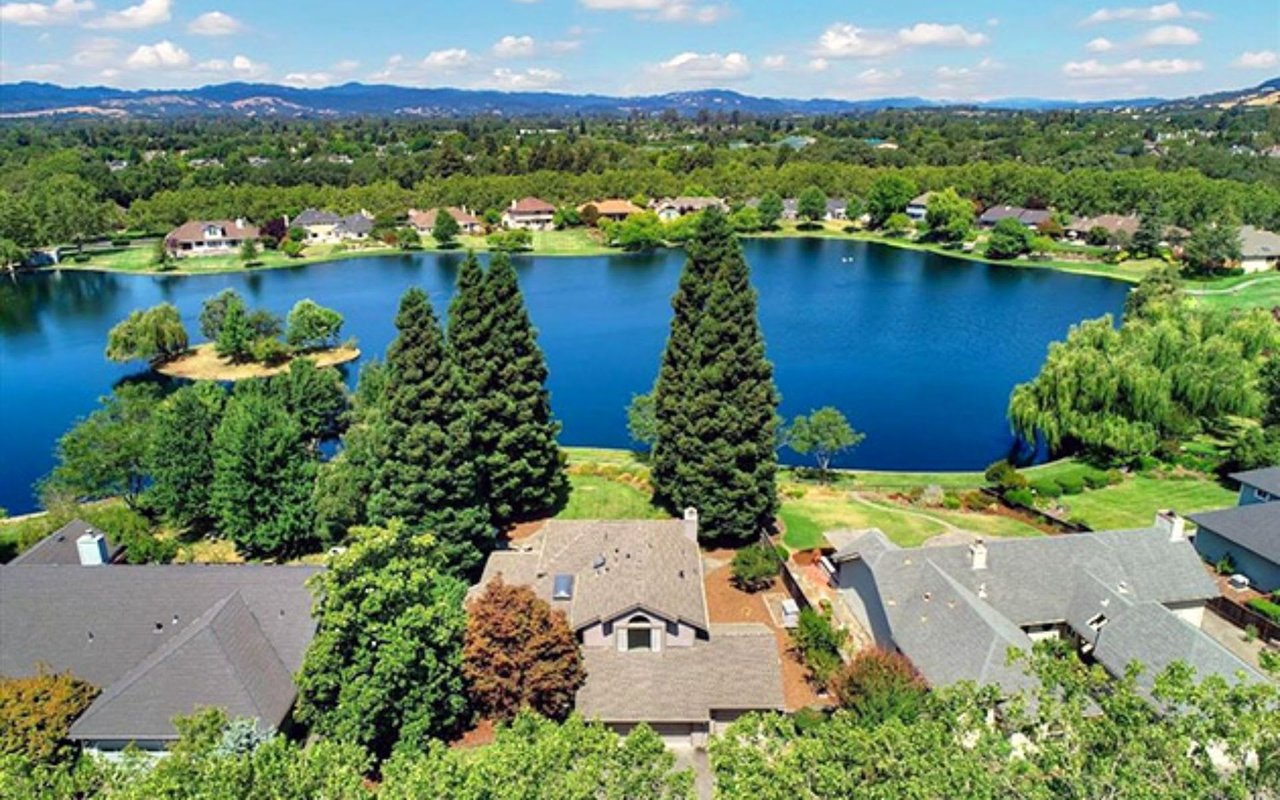
If you've been searching for a home in Sonoma County, there's a good chance you've found yourself weighing two very compelling options: Santa Rosa and Windsor. They're just about 10 miles apart on the 101, yet they offer genuinely different lifestyles, price points, and long-term opportunities. One gives you the energy and convenience of a city; the other wraps you in the warmth of a tight-knit suburban community.
Here at Aspira Realty, we're rooted right here in Windsor — and we love both of these places deeply. So consider this your honest, no-pressure guide to understanding what each community really offers, especially if you're a family thinking long-term about where you want to plant your roots.
The Big Picture: Urban Energy vs. Suburban Sanctuary
Santa Rosa is Sonoma County's largest city, with a population of roughly 180,000. It's a full-service urban hub with hospitals, colleges, a growing arts scene, professional employment, and a downtown that's actively being revitalized. There's a certain undeniable energy to Santa Rosa — it's the kind of place where you can grab your morning coffee at a local café, walk to a farmers market, and still catch a film at an independent theater all in one afternoon.
Windsor, by contrast, is a town of about 30,000 people. It's intentional in its scale, built around connection and community. The centerpiece of Windsor's downtown is the beloved Town Green, a beautifully designed gathering space where neighbors actually run into each other. The weekly Certified Farmers Market, Summer Nights on the Green concerts (running every Thursday evening through the summer), and over 30 annual community events give Windsor its unmistakable small-town heartbeat — without sacrificing modern convenience.
Neither is better, exactly. They're just beautifully different — and which one is right depends entirely on what your family needs most.
What the Market Is Telling Us Right Now
Let's talk numbers, because they tell an important story about value and trajectory.
In the Santa Rosa market, the median sale price is hovering around $740,000–$815,000 depending on the data source and time period, with homes selling in approximately 34–36 days on average. The market under $1 million has actually tightened considerably in 2026, with inventory down and absorption rates climbing firmly into seller's territory. For buyers in that entry-level range, Santa Rosa remains competitive.
Windsor, on the other hand, has been one of the strongest performers in all of Sonoma County. In March 2026, Windsor's median price jumped to $872,000, with homes selling in just 23 days — nearly half the time they took a year prior. The market here is, in the words of one local analyst, "competitive without being chaotic." That's a rare combination, and families are clearly taking notice.
What does this mean for long-term value? Windsor's price appreciation has been outpacing many neighboring communities, and there are structural reasons for that — including the infrastructure investments coming down the pipeline (more on that shortly). If you're thinking about where your home's equity will grow over the next 5–10 years, Windsor is a compelling case.
The SMART Train Factor: A Game-Changer for Both Cities
This is where things get really interesting, and where Windsor's future trajectory becomes especially exciting.
The Sonoma-Marin Area Rail Transit (SMART) train opened its Windsor station on May 31, 2025, placing regional rail service just steps from the Town Green. For Windsor residents, this means a real, practical alternative to commuting down the 101 — connecting directly to Santa Rosa, Petaluma, San Rafael, and Larkspur, where a pedestrian bridge links to the Golden Gate Ferry to San Francisco.
But here's the development that's generating real buzz right now: SMART broke ground in March 2026 on a $269 million, nine-mile extension from Windsor northward to Healdsburg, with passenger service expected by late 2028. This extension will add seven to eight new bridges, a brand-new Healdsburg station at the historic downtown depot, and an expanded multi-use pedestrian and cycling pathway.
Why does this matter for Windsor specifically? Because Windsor becomes the central hub of this extended corridor — the point where rail meets the Town Green, where the pathway connects communities, and where transit-oriented growth is already beginning to take shape. A new mixed-use housing development called "The Village on the Town Green" has been proposed for an 18-acre parcel just half a mile from the Windsor SMART station, which would bring hundreds of new homes, affordable units, and senior housing to the downtown core.
SMART itself carried 1.33 million passengers in 2025 — a 38% increase over the prior year. That kind of ridership growth signals that people are actually using this system, which reinforces the long-term value of homes near transit corridors.
Santa Rosa is already served by multiple SMART stops, including the heart of Railroad Square — a historic district that has seen a surge in new tenants and commercial leasing activity in 2025 and 2026. The city is actively pursuing a downtown financing district that could generate tens of millions of dollars for pedestrian connectivity, public realm improvements, and housing development. The momentum is real, even if it's moving at the pace of a larger, more complex city.
Downtown Cores: Revived and Rising
Santa Rosa's Railroad Square is having a moment. After years of mixed results, 2025 brought a significant uptick in office leasing — roughly 75,000 square feet of new leases signed in the downtown corridor — along with new retailers, restaurants, and the opening of an affordable housing complex right alongside the SMART tracks. Major employers like BKF Engineers and Poppy Bank have expanded their downtown footprints, and a new public art walk has brought life to the streets.
The revitalization work in Santa Rosa is genuine, though anyone honest will tell you it's a work in progress. Retail vacancies in some areas remain elevated, and some long-planned housing projects have faced delays. But the trajectory is upward, and the city's Prohousing Designation — awarded by the state — signals a serious commitment to building the housing pipeline.
Windsor's Town Green tells a different story — one of an already-thriving downtown that keeps getting better. The Certified Farmers Market runs Sundays from April through December. Restaurants, coffee shops, Oliver's Market, and local boutiques all cluster within easy walking distance. The SMART station, now open and active, has added a new layer of convenience and connectivity. And a 125-space public parking lot was added specifically to handle station-area demand without overwhelming the neighborhood.
Windsor's downtown doesn't need to be "revived" — it was thoughtfully built with community at its center, and it shows.
Raising a Family: Schools, Parks, and Space to Breathe
For families with kids, school quality is often the deciding factor — and both communities offer options worth exploring.
Windsor Unified School District is compact and highly regarded for its community feel. Windsor High School is ranked among the higher-performing schools in the Santa Rosa metro area, and parents consistently praise the smaller district size for fostering stronger teacher-student relationships. The district's manageable scale means less bureaucracy and more responsiveness to families.
Santa Rosa offers a broader range of educational options by sheer virtue of size — more schools, more specialized programs, and more choices at both the public and private levels. The Santa Rosa City Schools district includes magnet programs and charter options that attract families from across the county. It's a more complex landscape to navigate, but the diversity of programming can be a real asset.
On the parks and outdoor front, Windsor punches well above its weight. The town maintains over 100 acres of community and neighborhood parks, plus access to Foothill Regional Park for hiking, fishing, and open-space exploration. The layout of the town means kids can bike or walk to activities in a way that's increasingly rare in suburban California. Santa Rosa offers Howarth Park, Spring Lake Regional Park, and the Sonoma County Regional Parks system — all excellent, and all reflecting the scale advantage of a larger city.
Who Belongs Where? Thinking Through Your Priorities
Here's the honest truth: neither Santa Rosa nor Windsor is the universally "right" answer. The right choice depends on your season of life and what you value most.
Santa Rosa might be the better fit if you:
- Work in the city and value a shorter commute to healthcare, legal, financial, or other professional services
- Want the broadest possible range of dining, entertainment, and cultural options
- Are drawn to urban energy and the creative vibe of a city in active transformation
- Value the flexibility of multiple SMART stops and transit options
Windsor might be the better fit if you:
- Are prioritizing school environment and smaller-district community feel
- Want a walkable, event-rich downtown without urban complexity
- Are thinking long-term about equity growth in a community with strong infrastructure momentum
- Value knowing your neighbors, participating in local traditions, and feeling genuinely connected
What we hear from the families we work with at Aspira Realty is that Windsor often surprises people. They come thinking they want the city — and then they spend a Thursday evening at Summer Nights on the Green, wander through the farmers market, and start doing the math on what a home here could mean for their family's future. It's a quietly compelling place.
The Long-Term Value Equation
If you're thinking about real estate as an investment — and you should be — both communities have meaningful tailwinds.
Santa Rosa's downtown revitalization, its Prohousing designation, and its position as the county's primary employment center all create a floor of demand that tends to hold values stable even in softer market conditions. The city's breadth means there will always be buyers.
Windsor's long-term value proposition is more concentrated and arguably more exciting right now: a SMART station on the Town Green, a $269 million rail extension under construction to the north, new housing development in the pipeline, and a track record of homes selling quickly and above expectations. Communities that become regional transit hubs tend to see sustained appreciation, and Windsor is positioning itself as exactly that.
Ready to Explore Your Options?
Whether you're leaning toward the urban convenience of Santa Rosa or the suburban warmth of Windsor, the most important step is simply getting clear on what your family needs — and then walking through the door of the right home in the right neighborhood.
At Aspira Realty, we specialize in exactly this kind of local, nuanced guidance. We live and work here. We know these streets, these schools, these communities. And we genuinely love helping families find not just a house, but the right place to build their lives.
We'd love to chat. Reach out to us at (707) 837-5512, visit us at 559 David Clayton Lane, Windsor, CA 95492, or connect with us online.
Your next chapter is waiting — and we'd be honored to help you find it.